Table of Contents
ToggleKitchen islands have become the heart of modern homes, and they deserve lighting that works as hard as they do. Whether you’re prepping dinner, doing assignments, or hosting friends, the right fixtures overhead make all the difference, both functionally and aesthetically. Kitchen island lighting isn’t just about visibility: it sets the mood, defines the space, and ties together your overall design. The good news? You don’t need an electrician’s license to understand your options or plan a smart installation. This guide walks you through styles, practical considerations, and real-world installation steps so you can light up your island with confidence.
Key Takeaways
- Kitchen island lighting requires 250 to 400 lux of brightness to ensure safe food prep and comfortable visibility without shadows or eye strain.
- Hang pendant lights 30 to 36 inches above the countertop, or 36 to 42 inches for islands with seating, following building codes to avoid cramped sightlines or ineffective task lighting.
- Space pendants 24 to 36 inches apart across your island, typically installing two to four fixtures depending on island length, for balanced light distribution and visual appeal.
- Verify your ceiling has adequate bracing before installing heavy fixtures; drywall anchors alone won’t support chandeliers over 15 pounds—always secure to a joist or cross-brace.
- Run kitchen island lighting through a dedicated 20-amp circuit with proper electrical codes, and consult a licensed electrician if you’re unsure about wiring or need to run new lines.
- Add a dimmer switch during installation to adjust island lighting between task work and ambient ambiance, ensuring your chosen bulbs are dimmable first.
Why Kitchen Island Lighting Matters
Your kitchen island gets heavy use. It’s a prep station, dining spot, work surface, and often the first place guests see when they walk in. Poor lighting here creates shadows over your cutting board, strains your eyes, and makes the whole kitchen feel dim and uninviting. Good island lighting solves all three problems at once.
Task lighting over an island needs to be bright enough to work safely and see what you’re doing, usually 250 to 400 lux (a lux is a unit of illumination). That’s roughly 50 watts of incandescent light or 10–20 watts of LED per fixture, depending on the bulb type and spread. The fixtures also anchor the room visually. They can be bold statement pieces that draw the eye or subtle accents that blend in, your call, but they’re working 24/7 either way.
Height matters too. Fixtures hung too low will feel cramped and block sightlines: too high and they won’t light your work surface effectively. Most building codes and design standards recommend hanging island pendants 30 to 36 inches above the countertop surface. For islands with seating, you might go slightly higher (36 to 42 inches) to avoid glare in diners’ eyes.
Finally, well-planned island lighting ties together your kitchen’s design language. Whether you choose sleek minimalist pendants, vintage Edison bulbs, or a statement chandelier, the fixtures reinforce your style and make the space feel intentional rather than an afterthought.
Popular Kitchen Island Lighting Styles and Fixtures
Pendant Lights for Islands
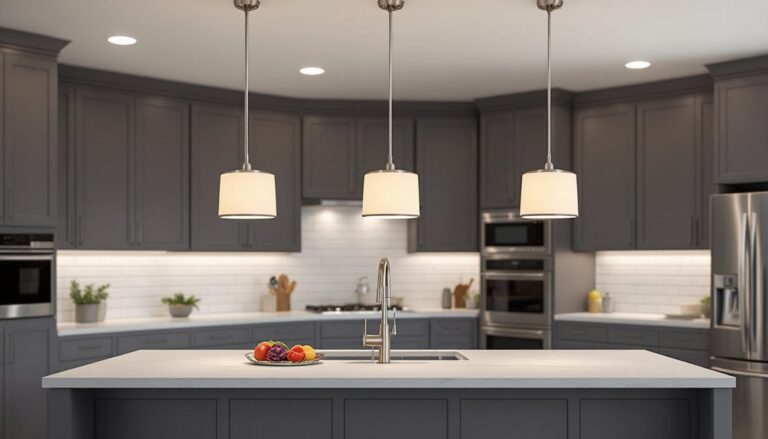
Pendants are the workhorse of island lighting. They hang from a single cord or chain and come in nearly every style imaginable, industrial metal cages, frosted glass globes, ceramic shades, geometric designs, and more. Most kitchens benefit from installing two to four pendants spaced evenly across the island, typically 24 to 36 inches apart.
Why pendants work so well: they deliver direct light onto your work surface, they’re available at every price point, and they don’t require structural ceiling reinforcement like some heavier fixtures. You can swap bulbs and shades easily without rewiring. When choosing pendant fixtures, look at shade opacity, opaque shades throw light downward (better for task work), while translucent or open-bottom designs spread light around the room more evenly.
A practical tip: if your ceiling is 8 feet tall (standard), mount the pendant canopy (the mounting plate) flush to the ceiling and hang the fixture 30 to 36 inches below. If your ceiling is 9 feet or higher, you have a bit more wiggle room and can go lower for visual impact. Adjustable cable or chain pendants make this easy to fine-tune during installation.
Common pendant styles include schoolhouse designs (industrial nostalgia), dome or bell shapes (clean, versatile), seeded or clear glass (contemporary), and fabric or linen shades (softer ambiance). 10 stunning pendant lights designed to highlight kitchen islands showcase how different finishes and proportions suit various kitchen aesthetics.
Chandeliers and Statement Fixtures
Chandeliers over islands are bolder moves, but they work beautifully in kitchens with higher ceilings (9 feet+) and open concepts. Unlike pendants, a chandelier casts light in multiple directions and becomes a focal point. Go too small and it looks lost: too big and it dominates the space and blocks sight lines across the island.
A good rule of thumb: the chandelier’s width should be 12 inches narrower than your island’s width. For a standard 3-foot-wide island, aim for a 24-inch-diameter fixture. For 4-foot islands, look at 30 to 36 inches. This proportion keeps the chandelier prominent without overwhelming the counter.
Modern kitchen chandeliers often downplay the crystal-and-gilt tradition in favor of clean-lined designs, brass or black metal frames, mixed materials, and integrated LED bulbs. These fixtures handle wet kitchen air better and tend to match contemporary kitchen aesthetics. Vintage-inspired or farmhouse chandeliers also work if your kitchen’s style supports them, but avoid heavy ornamental designs that collect grease from cooking.
If you’re considering a chandelier, check your ceiling height. Hang the bottom of the fixture 30 to 36 inches above the countertop (same as pendants). This usually means the canopy sits flush to the ceiling. Unlike pendants, chandeliers are heavier, so you must confirm that your ceiling has adequate bracing, ideally a ceiling joist or cross-brace directly above the mounting point. Drywall anchors alone aren’t sufficient for anything heavier than 15 pounds. 21 creative kitchen island lighting ideas explores a wide range of options from pendants to chandeliers, helping you find what suits your space.
How to Plan and Install Island Lighting
Step 1: Measure and Layout
Start by knowing your island’s exact dimensions. Measure width, depth, and distance from nearby cabinets or walls. Note your ceiling height. Sketch a rough plan with your island’s shape and the planned fixture locations. For two pendants on a standard island, space them about 12 to 18 inches from each edge and center them on the longest axis. For three or four pendants, divide the island’s length evenly, typically 24 to 36 inches apart.
Step 2: Check Your Existing Electrical Setup
Does your island already have an outlet or rough-in wiring? Many newer kitchens include an island circuit. If not, you’ll need to run a new line from your breaker box to the pendant location. Codes vary by jurisdiction (check your local IRC or electrical code), but most require a dedicated 20-amp circuit for island receptacles and hardwired fixtures. Running new wire is not a casual DIY job if you’re unfamiliar with electrical code, this is a good time to call a licensed electrician. If existing wiring is present but has the wrong amp rating or disconnect method, a pro can assess and upgrade it.
Step 3: Install Ceiling-Mount Hardware
If you’re hanging from existing wiring and your fixtures are light (under 15 pounds each), you can likely use a standard pancake electrical box and mounting strap. For anything heavier, or if you’re running new wire, ensure the box is secured to a ceiling joist (or cross-brace) with an appropriate Home Depot Overhead Lighting option to support the load. Never mount pendants or chandeliers directly to drywall.
Wire routing matters: push the supply wire into the electrical box, leave 6 inches of stripped wire for connections, and secure any exposed cables to the ceiling joists every 4 to 6 feet using proper cable clips (not staples, which can damage insulation).
Step 4: Connect the Fixture Wires
Turn off power at the breaker and verify it’s off using a non-contact voltage tester. Connect the fixture’s neutral (usually white) wire to the supply neutral using a wire nut and twist gently until snug. Do the same for the hot (usually black) wire. Ground wires (bare copper or green) connect together, also with a wire nut. Tuck all connections carefully into the electrical box and secure the canopy to cover the box.
Step 5: Install the Shade or Fixture Body
Thread the pendant cord or chain through the canopy and suspend it to your planned height, use a tape measure from the ceiling and mark the height with tape on the cord before securing. Hang the shade, globe, or fixture body according to manufacturer instructions (usually a set screw or snap-fit base). Install your bulb, restore power, and test.
Safety Reminders
Wear safety glasses when working overhead. If you’re working from a ladder, have someone spot you or set the ladder on stable, level ground. Never assume power is off without testing. If you encounter old cloth-insulated wiring (common in pre-1960 homes) or any unusual junction, stop and consult a licensed electrician.
Dimmers and Control
Consider adding a dimmer switch during installation. This lets you adjust island lighting for task work or ambiance. Confirm your bulbs are dimmable before installing (not all LEDs dim smoothly). A dimmer requires a neutral wire at the switch location, check your local code, as recent updates mandate neutral wires in new or updated switch installations.
Related fixture ideas: Lighting for Home Bar covers similar pendant and ambient lighting concepts that apply to islands with seating and entertaining in mind. Also, The Kitchn offers kitchen design ideas and solutions that can inspire your island lighting choices.
Conclusion
Kitchen island lighting is one of the highest-impact, most visible upgrades you can make. Well-chosen fixtures solve real functional problems, you see your cutting board, your guests aren’t squinting, while tying your entire kitchen design together. Start with your island’s dimensions and ceiling height, commit to a style that fits your kitchen’s character, and don’t skip the fundamentals: proper wiring, adequate height, and fixture weight rated for your ceiling structure. Whether you go with sleek pendants or a statement chandelier, the payoff in both usability and visual appeal is worth the effort.