Table of Contents
ToggleOutdoor wall mount lighting does more than brighten your patio or entryway, it transforms how your home looks after dark while adding an extra layer of security. Whether you’re installing fixtures along a front walkway, above a garage door, or flanking a back patio, the right wall-mounted lights can completely change your property’s curb appeal and usability. This guide walks you through the types of fixtures available, where to install them, and how to pick options that match both your home’s style and your practical needs. We’ll cover everything from uplights and sconces to smart-enabled systems that let you control brightness and color from your phone.
Key Takeaways
- Outdoor wall mount lighting enhances home security by illuminating entry points and dark areas, while also improving curb appeal and property value with a low-cost upgrade.
- Choose fixture types strategically: uplights work at 2–4 feet to highlight details, downlights at 8–12 feet for entries, and sconces at 60–66 inches for balanced illumination without glare.
- Proper installation requires locating studs, using heavy-duty anchors for non-stud locations, running GFCI-protected circuits, and sealing gaps with silicone caulk to prevent water and pest infiltration.
- LED bulbs in outdoor fixtures consume 75–80% less energy than incandescent bulbs and last 15–25 years, delivering significant long-term savings on electrical bills.
- Smart-enabled outdoor wall mount lighting systems let you control brightness, color temperature, and schedules via phone or voice assistant, with costs starting around $80–$200 per unit.
- Layer multiple fixture types—uplights, sconces, and downlights—to eliminate dark pockets, create visual interest, and ensure even illumination across patios and walkways.
Why Outdoor Wall Mount Lighting Matters for Your Home
Outdoor wall mount lighting serves multiple purposes that go well beyond aesthetics. Good exterior lighting improves security by illuminating entry points, pathways, and dark corners where an intruder might hide. Studies consistently show that well-lit properties deter break-ins more effectively than unlit ones.
Beyond security, wall-mounted lights extend the usability of your outdoor space. You can host evening gatherings on the patio, safely navigate the backyard at night, and highlight landscaping or architectural features you’ve invested in. Proper lighting also creates ambiance, warm tones feel welcoming and intimate, while cooler tones suggest modern sophistication.
From a home value perspective, attractive outdoor lighting is a relatively low-cost upgrade that buyers notice immediately. Unlike a new roof or deck, exterior lights don’t require a huge budget but deliver visible impact. Installing wall mount fixtures also requires no permanent structural changes in most cases, making it an ideal first-time electrical project for many DIYers.
Types of Outdoor Wall Mount Lighting Fixtures
Uplights and Downlights
Uplights cast light upward and are typically mounted low on a wall to highlight architectural details, siding textures, or climbing vines. They create dramatic shadows and visual interest. Downlights mount higher on the wall and direct light downward, perfect for illuminating entry doors, steps, or patios below. Many homeowners use downlights in pairs flanking a front door for symmetrical, welcoming light.
Uplights work best at 2–4 feet above ground and should be spaced 8–12 feet apart depending on fixture brightness (measured in lumens). Downlights perform well at 8–12 feet high, aiming at 45-degree angles to avoid harsh glare directly in eyes. Motion-sensor uplights and downlights are popular for security and energy savings, they activate only when movement is detected.
Sconces and Lanterns
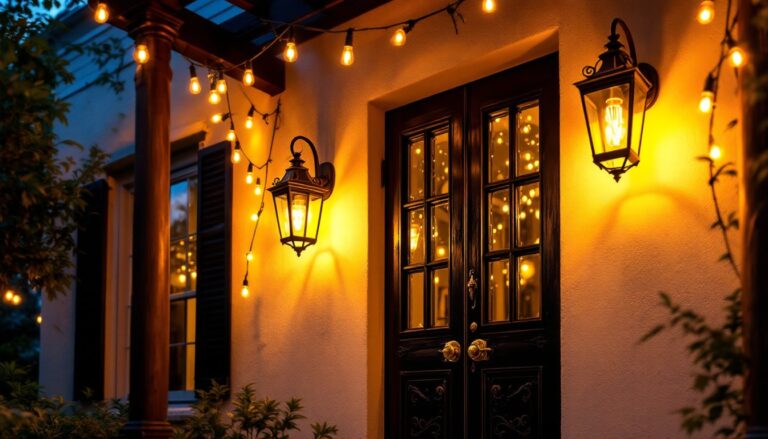
Sconces are wall-mounted fixtures that sit flush or project slightly from the wall, housing bulbs inside decorative frames. They come in countless styles, from traditional coach lanterns to modern minimalist boxes, and work well flanking doors, windows, or along pathways. Sconces typically mount 60–66 inches above the ground (roughly eye level when standing) to provide balanced illumination without glare.
Lanterns are often cube or hexagon-shaped fixtures with glass panes that diffuse light evenly. They convey a classic or rustic feel and perform well in pairs on either side of an entry. Lanterns tend to be bulkier than sconces and work better on larger walls or on structures like a detached garage. Both sconce and lantern styles range widely in price, from $30 basic models to $300+ designer pieces, so your choice depends on your home’s existing architectural style and your budget.
Choosing the Right Location and Installation Tips
Location is everything with outdoor wall lighting. Start by walking your property at dusk and evening to identify dark spots, entry hazards, and areas you want to highlight. Mark potential mounting points with painter’s tape and step back to imagine how light will fall.
For security lighting, prioritize entry doors, garage doors, and vulnerable windows. Install fixtures 12–18 inches to either side of doors rather than directly above, this reduces harsh downward shadows on faces. Along pathways, space fixtures 8–10 feet apart and mount them 3–5 feet high so light spreads across the walking surface.
Before drilling, locate studs using a stud finder, they’re typically 16 inches on center. Mounting directly into studs or the rim joist (the band of framing around your home’s perimeter) ensures a solid, vibration-free install. If studs don’t line up with your desired location, use heavy-duty toggle bolts or expansion anchors rated for your fixture’s weight. Most sconces and downlights weigh 2–5 pounds, well within standard anchor limits.
Run electrical conduit (a protective metal or plastic tube) from your fixture location to a nearby outlet or to a new circuit breaker if you’re installing multiple lights. Check local building codes, most jurisdictions require outdoor receptacles to be on a GFCI (ground-fault circuit interrupter) circuit for safety. If you’re unsure about wiring or your home’s electrical capacity, hire a licensed electrician. This isn’t an area to guess.
Install IP65-rated fixtures (or higher) for reliable weather resistance. IP rating indicates dust and water ingress resistance: IP65 means the fixture withstands water jets from any direction. Seal all gaps where conduit meets the fixture and wall with silicone caulk to prevent water infiltration and pest entry.
Smart Lighting and Energy-Efficient Options
Smart outdoor wall lights let you control brightness, color temperature, and on/off schedules from your phone or voice assistant. Brands like Philips Hue, LIFX, and Nanoleaf offer Wi-Fi-enabled sconces and uplights that integrate with Alexa, Google Home, or Apple HomeKit. With these systems, you can set lights to fade on at sunset and fade off at midnight, or trigger them remotely if you arrive home late.
Energy savings come from two places: LED bulbs and smart scheduling. LED outdoor fixtures use 75–80% less energy than incandescent or halogen bulbs and last 15–25 years versus 1–2 years for older tech. A 40-watt-equivalent LED pulls only 5–8 watts of actual power. Over a heating season (if lights run 10 hours daily), the difference between LED and incandescent adds up quickly on your bill.
You’ll find smart-enabled fixtures at mid-range prices ($80–$200 per unit). Wired smart systems (hardwired to your home’s electrical panel) offer more reliable connectivity than battery-powered options, though they require professional installation if you’re unfamiliar with panel wiring. Battery-powered smart sconces exist but typically need new batteries every 6–12 months depending on use, factor maintenance into your decision.
Many homeowners mix systems: smart home automation technology powers a few key entry lights while connected home lighting guides help them choose dimmable LEDs for ambiance lighting elsewhere. If budget is tight, start with standard dimmable LED fixtures and retrofit smart controls later.
Design Ideas to Transform Your Outdoor Space
Lighting design is as much about style as function. Choose fixture finishes that match or complement your home’s trim and hardware. Black fixtures convey modern minimalism and hide dust well. Bronze and copper feel warm and traditional. Stainless steel suits contemporary or coastal styles. Mix finishes sparingly, two per home is a good rule to avoid visual chaos.
Warm white light (2700K color temperature) feels inviting and flatters most home exteriors. Cool white (5000K+) suits modern designs and maximizes security visibility. If you’re installing uplighting on a living wall or outdoor fence, consider 3000K warmth to highlight greenery without washing out leaf color.
Scale matters. Small 4-inch sconces suit cottage or bungalow homes: 8–10 inch fixtures work for larger two-story houses. Oversized lanterns on a tiny cape cottage look ridiculous: undersized lights on a grand colonial disappear. Stand back from a distance and imagine the proportion.
Layer your lighting by using multiple fixture types. Pair uplights along a planter bed with flanking sconces at the entry and downlights over a deck edge. This creates visual interest and eliminates dark pockets. Motion-sensor uplights under eaves add surprise drama when triggered at night. If you’re planning an outdoor living area with wall features, integrate lighting during the planning phase so conduit runs align with construction, saving time and headaches later.
For patios and seating areas, outdoor lighting approaches from industry sources recommend aiming for even illumination across the space rather than pools of shadow. Position sconces or downlights so their beams overlap slightly, eliminating dark corners where guests stumble or pests hide.
Putting It All Together
Outdoor wall mount lighting is a straightforward upgrade that pays dividends in security, usability, and curb appeal. Start with a plan: identify high-traffic areas and security priorities, choose fixtures that match your home’s style, and don’t skip proper electrical installation or weather-resistant materials. Whether you go with motion-activated uplights, smart-enabled sconces, or traditional lanterns, the key is matching light placement and brightness to your property’s layout. Take your time with installation, test everything before sealing conduit, and don’t hesitate to call an electrician if wiring feels beyond your skill level. A well-lit exterior transforms how your home feels and functions, both day and night.