Table of Contents
ToggleRecessed lighting, those clean, flush-mounted fixtures that disappear into your ceiling, costs money to install, but the actual price swings wildly depending on a few key variables. Are you upgrading an existing room or running fresh electrical? Is your ceiling drywall or plaster? Will you hire an electrician or handle some of it yourself? Understanding the real cost breakdown ahead of time helps you budget properly and avoid surprises. This guide walks you through typical pricing for recessed lighting installation in 2026, what influences those costs, and honest talk about when to hire help versus tackling it yourself.
Key Takeaways
- The cost for recessed lighting installation typically ranges from $400–$1,200 for a 4–6 fixture retrofit, with fixture prices starting at $30–$150 each and electrician labor running $75–$150 per hour.
- LED fixtures cost more upfront but use 75% less energy and pay for themselves within 3–5 years, making them the recommended choice for long-term savings and safety.
- Ceiling type significantly affects pricing—drywall is cheapest to work with, while plaster, vaulted, or insulated ceilings can increase labor costs by 25–50% due to accessibility and complexity.
- A hybrid DIY approach where you cut drywall holes and hire an electrician for wiring can save 40–60% compared to full professional installation while maintaining code compliance.
- Always check local building codes for permit requirements before starting, and get multiple bids from licensed electricians to avoid surprises and ensure proper code compliance.
Average Cost Breakdown for Recessed Lighting Installation
For a typical room retrofit with 4–6 recessed fixtures, homeowners spend between $400 and $1,200 in total labor and materials combined. That breaks down roughly like this:
Fixtures themselves typically run $30–$150 per unit depending on trim ring style, color temperature, and dimming capability. A basic white trim recessed light costs less than an adjustable or architectural-grade fixture.
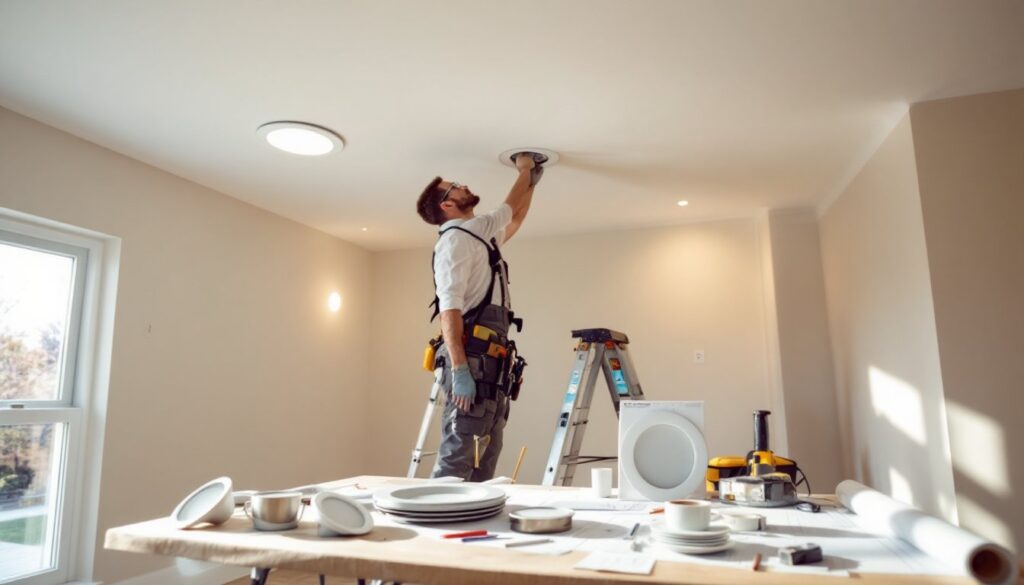
Labor costs for an electrician usually range from $75–$150 per hour. Installing a single fixture averages 30–60 minutes, so expect $40–$150 in labor per light depending on accessibility and electrical complexity.
Additional materials, electrical boxes, wire, junction boxes, drywall patch, add another $50–$200 to the project depending on how much new circuitry is required.
New construction or open ceilings are cheaper per fixture because electricians have easier access. Retrofitting into a finished ceiling with insulation overhead costs significantly more due to working around existing joists, ductwork, and careful demolition. If your project requires pulling new electrical circuits from your panel, add another $200–$500 depending on distance and code requirements.
Factors That Impact Your Total Project Cost
Fixture Type and Quality
Fixture choice heavily influences your budget. Standard recessed downlights with basic trim rings start around $30–$60 each. Adjustable or gimbal fixtures (the kind that tilt to aim light) cost $60–$120. Architectural-grade fixtures with integrated LED, smart controls, or specialty finishes run $100–$200+.
LED fixtures cost more upfront than incandescent or halogen, but they use 75% less energy and last 25,000+ hours, so they pay for themselves over time. Most electricians now recommend LED for new installations because of efficiency and heat reduction, especially in attics or tight ceiling cavities.
Trim ring finishes also vary. White or black trim is standard: brushed nickel or bronze costs 10–30% more.
Ceiling Type and Accessibility
Drywall ceilings are the easiest and cheapest to cut. Electricians use a drywall saw to open 4–5 inch holes and slide the fixture housing up through the opening.
Plaster ceilings (common in older homes) are messier and slower. Plaster cracks and chips: the electrician must work carefully to minimize damage and may need to reinforce edges with backing material.
Popcorn or textured ceilings require extra demolition and patching. If you’re removing the popcorn texture anyway, factor in that cost separately, it often includes abatement for asbestos testing if the home is pre-1980s.
Vaulted, sloped, or cathedral ceilings are harder to work in and take longer, pushing labor costs up 25–50%. Accessibility matters: if the electrician can’t safely reach or maneuver in the attic above, costs rise.
Insulation above your ceiling is a real factor. Working around fiberglass batting or foam slows the job and requires careful handling to keep insulation intact and effective. Sealed or spray-foam attics are harder still because the electrician must work more slowly to avoid damaging the air seal.
DIY vs. Professional Installation Costs
Installing recessed lighting yourself saves labor costs but carries real risks. Electrical work is code-regulated: improper installation can cause fires, electrocution, or code violations that later prevent you from selling or insuring your home.
DIY approach: If you’re experienced with electrical work, you can install fixtures in an open ceiling (new construction or during a major renovation) for just fixture and material costs, roughly $150–$400 for 4–6 lights. You’ll buy the fixtures, cut holes, mount the housing, and run wire yourself. This assumes you understand NEC (National Electrical Code) requirements, your local building codes, and you don’t need to pull a new circuit from your panel.
Hybrid approach: Many DIYers cut the drywall holes and do the cosmetic work, then hire an electrician for the wiring and circuit work. This typically costs 40–60% of full-service installation and spreads the risk.
Professional installation: Hiring a licensed electrician costs more upfront but includes code compliance, permitting (if required), and warranty. If something goes wrong, the electrician is liable, not you. Typical costs for 4–6 fixtures run $800–$1,500 including labor and materials. Recent home service provider reviews and project cost guides show electricians charge hourly rates plus materials, so always get a detailed quote upfront.
Local building codes vary, some jurisdictions require permits for any recessed lighting work: others don’t. Always check with your local building department before starting. If you’re not licensed and don’t pull a permit when required, you’re risking fines and future liability.
Money-Saving Tips for Your Recessed Lighting Project
Install fixtures on existing circuits where possible. If your new lights can tie into a nearby switch and circuit with spare capacity, you avoid the $200–$500 cost of running a new circuit from your main panel. An electrician can verify capacity quickly.
Choose LED fixtures from the start. Yes, they cost more per unit, but you’ll recoup the difference in energy savings within 3–5 years. They also generate far less heat, reducing load on your HVAC system.
Batch your project. Electricians charge hourly, so installing 6 lights in one visit costs less per fixture than spreading the work over two days or two rooms. Plan ahead and get all fixtures wired in a single session.
Handle the drywall work yourself. Cutting holes and patching is straightforward and saves 2–4 hours of labor. Use a drywall saw or adjustable hole saw (rated for the fixture diameter, typically 4 inches for standard downlights) to cut clean openings. Patch small holes with drywall compound after the fixture is in: it’s much easier than patching before installation.
Get multiple bids. Electrician rates vary by region and experience. Get three quotes and ask what’s included, permit fees, material markups, and cleanup all affect the final price.
Recent home renovation cost guides and contractor resources show that homeowners save 15–25% by planning thoroughly and hiring during off-season (winter in many regions). Electricians are busier in spring and summer, so you may get better pricing in slower months. Comprehensive pricing information from recessed lighting installation data also shows regional variation: costs in high-cost metros run 20–30% higher than rural areas.
Conclusion
Recessed lighting costs $400–$1,500 for a typical 4–6 light retrofit, depending on fixtures, ceiling type, and whether you hire help. Do your assignments on local codes, get firm quotes, and don’t skip electrical work just to save money, a fire or shock hazard isn’t worth it. Plan the project, gather materials, and decide upfront whether you’re going full DIY, hybrid, or all-professional. The clearer your plan, the closer you’ll stay to budget.