Table of Contents
ToggleOutdoor column lighting transforms a plain porch or patio into an inviting outdoor room, and it doesn’t have to be complicated. Whether you’re looking to add security, ambiance, or curb appeal, the right column lighting can set the tone for evening gatherings and make your home feel intentional and complete. This guide walks you through seven practical approaches to outdoor column lighting ideas, from classic wall-mounted sconces to cutting-edge smart systems, so you can pick the strategy that fits your space, budget, and style.
Key Takeaways
- Outdoor column lighting ideas include wall-mounted sconces, solar-powered fixtures, uplighting and downlighting techniques, string lights, smart systems, and accent fixtures—each suited to different budgets and aesthetic preferences.
- Wall-mounted sconces deliver timeless elegance when mounted 36–40 inches above floor level on vertical surfaces, with wet-rated fixtures (marked for rain exposure) preventing rust and corrosion in exposed outdoor settings.
- Solar column lights eliminate wiring and electrical costs but require 6–8 hours of direct sunlight daily and have battery lifespans of 2–4 years, making them ideal for sunny regions where simplicity matters more than year-round brightness.
- Layered lighting combining uplights and downlights creates dimensional mood—uplights accent architectural features while downlights mimic moonlight and prevent harsh shadows—both more effective when set on separate dimmer circuits.
- Smart outdoor lighting systems integrate with home automation platforms to automate schedules, adjust color temperature, and enable motion-sensor security, though they require professional hardwired installation or battery-powered replacements every 2–3 years.
- Material selection—cast aluminum, stainless steel, copper, or brass—and finish choices (matte black, oil-rubbed bronze, brushed nickel) determine durability against UV rays and salt spray; match fixtures to door hardware and railings for architectural cohesion.
Wall-Mounted Sconces for Timeless Elegance
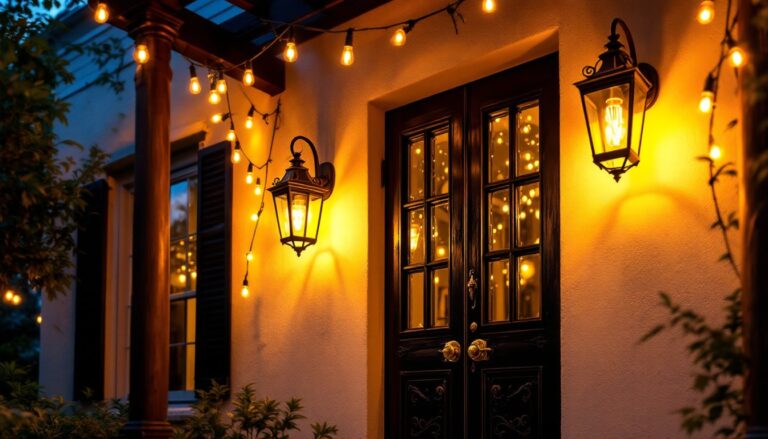
Wall-mounted sconces are the workhorse of outdoor column lighting. Flanking a front door, porch posts, or covered patio area, they deliver even light and clean lines that suit everything from modern farmhouse to mid-century modern aesthetics.
When choosing sconces, consider the mounting height. Standard practice places the center of the fixture 36 to 40 inches above finished floor level on vertical surfaces: this keeps light at eye level while minimizing glare. For wider porches, pair sconces on opposite sides of the entrance or space them 4 to 6 feet apart along a colonnade.
Material matters in outdoor settings. Look for cast aluminum or stainless steel bodies with tempered glass or acrylic diffusers that resist corrosion and UV fade. Wet-rated fixtures (marked for areas exposed to direct rain) use sealed ballasts and gaskets to keep moisture out. Dry-rated sconces work fine under eaves or deep overhangs, but expose them to spray and they’ll rust or corrode.
Wattage and bulb type affect both aesthetics and utility. A 40 to 60-watt equivalent LED (roughly 5–7 watts actual draw) in warm white (2700K color temperature) mimics traditional incandescent warmth. Cool white (4000K) feels more clinical, which can look harsh on a residential porch. Choose frosted or opal diffusers to soften glare: clear glass looks sleek but can be uncomfortably bright.
Installation requires running power from your home’s electrical panel or an existing fixture. Hire a licensed electrician if you’re unsure about code compliance in your area: the NEC (National Electrical Code) mandates GFCI protection for outdoor outlets and certain outdoor lighting circuits. A pro will ensure proper voltage, grounding, and weatherproofing, mistakes here invite shock or fire hazards.
Solar-Powered Column Lights for Eco-Friendly Ambiance
Solar column lights eliminate wiring headaches and monthly electric bills. Modern LED solar fixtures are far brighter than the dim stakes of a decade ago, and many offer 8–12 hours of runtime on a full charge.
A solar light needs direct sun exposure during the day to store energy. Place them where they’ll receive at least 6 to 8 hours of unobstructed daylight, south-facing spots are ideal in the Northern Hemisphere. Shaded areas (under eaves or dense trees) starve the battery and dim nighttime output.
They come in several styles: bollard lights (short, ground-mounted posts), tall pedestal fixtures, wall-mounted with solar panels on top, and hanging lanterns. For column-specific applications, look for wall-mount solars that clip to porch supports or vertical posts, the solar panel sits topside where it catches light.
Benefits of Solar Options
- No electrical work. Mounting is purely mechanical: no permits or licensed trades required.
- Low operating costs. Free energy from the sun eliminates wiring and power-draw expenses.
- Easy relocation. Move fixtures seasonally or if you rearrange your outdoor space.
- Weather resistance. Quality solar lights use sealed batteries and IP65-rated housings (dustproof and waterproof under direct spray).
Downsides exist: battery lifespan is typically 2–4 years before replacement is needed, cloudy winters reduce output, and upfront cost per fixture runs higher than plug-in alternatives. But, if you’re in a sunny region and value simplicity, solar is hard to beat.
Uplighting and Downlighting Techniques
Uplighting and downlighting are directional tactics that highlight architectural features or create mood through shadow and contrast.
Uplighting aims light upward, at a column’s top, underside of an eave, or tall tree canopy. This technique softens facial features during evening gatherings and adds drama to textures like stone or timber. Position uplights 12 to 18 inches away from the base of a column to avoid harsh shadows on faces. Use 12 to 20-watt LED spotlights (color temp 2700K for warmth) directed at a 45-degree angle or steeper.
Downlighting shines light downward from overhead, mounted on a porch ceiling, under a pergola beam, or at column capitals. It mimics natural moonlight and is more practical for reading or navigating. Downlights glare less and don’t cast long shadows. A 30 to 40-watt equivalent LED downlight (about 6–8 watts) delivers comfortable ambiance without blinding guests.
Combining both techniques creates layered, dimensional lighting. For instance, downlights on the porch soften general illumination while uplights accent structural columns or nearby plantings. This approach is common in Bull Mountain Outdoor Living:-style designs where every detail counts.
Warm white remains the standard: cool white spot fixtures can feel harsh unless you’re going for a modern, high-contrast aesthetic. Pair uplights and downlights on separate dimmer circuits if possible, so you can adjust mood without adding or removing fixtures.
String Lights and Accent Fixtures
String lights, from bistro café strands to globe pendants, add festive warmth and visual interest. They’re especially effective for patios, pergolas, or along column-supported awnings.
Choose between traditional incandescent Edison bulbs (warm, nostalgic, hotter) and LED string lights (cooler, more efficient, lower heat). LED strings last 25,000+ hours and draw a fraction of the power. Most outdoor strings are rated IP44 or higher for splash and dust resistance.
Spacing depends on fixture size and desired density. For C7 or C9 bulbs (the classic Christmas-style strings), space 12 to 24 inches apart for cozy coverage without overwhelming glare. Smaller café lights work at 18 to 36-inch intervals. Run strings in straight lines or gentle curves: sag them slightly (about 2 to 3 inches per 10-foot span) for a relaxed, intentional look.
Accent fixtures include pendant lights, lanterns, and decorative uplights. Pendant lights work well suspended from pergola beams or hung at angles from column tops. Lanterns mounted on posts or posts offer old-world charm. According to Southern Living, porch lantern traditions remain iconic in regional outdoor design.
For column-specific accents, consider installing a small recessed or semi-flush fixture at the top of a post to create a focal point. Use frosted shades to soften light and reduce glare directed at eye level.
Safety reminder: outdoor electrical strings must be plugged into GFCI-protected outlets. Never run standard indoor extension cords outdoors for more than a few hours: use outdoor-rated cords with proper gauge (12 AWG or thicker for 50+ feet).
Smart Lighting Systems for Modern Homes
Smart outdoor lighting integrates with your home automation hub, Amazon Alexa, Google Home, or Apple HomeKit, so you control brightness, color, and schedules from a phone or voice command.
Wi-Fi or Zigbee-enabled fixtures cost more upfront but deliver flexibility. Dim lights at dusk, brighten them for a gathering, or set them to flicker warmly for ambiance without moving a switch. Many systems allow color-tuning (2700K to 5000K) on a single fixture, so you adjust warmth seasonally or by mood.
For columns, smart outdoor wall sconces and bollard lights are widely available from mainstream brands. Installation is the same as hardwired or solar models, no special wiring if you’re using battery-powered smart bulbs. Plug-in models need a weatherproof outdoor receptacle or power extension run by a licensed electrician.
Scheduling is where smart systems shine. Automate lights to turn on at sunset and off at a set time, no manual flipping, no forgotten lights draining your bill. Some systems integrate with motion sensors, so lights activate when guests approach your porch, doubling as a Security Lighting for Home: measure.
Battery-powered smart bulbs (swapped into standard outdoor sockets) last 2–3 years before needing replacement. Hardwired smart systems are more reliable long-term but require professional installation and proper GFCI protection per code.
Weather-sealing is critical: ensure fixtures carry IP65 or higher ratings for outdoor use and have sealed connections to resist moisture infiltration.
Choosing Materials and Finishes
Material selection determines how well your lighting survives UV rays, salt spray, and temperature swings.
Aluminum and zinc alloy are industry standards for outdoor fixtures. Cast aluminum resists rust and is easy to paint if you want a custom color match. Zinc plating (often on hardware) corrodes if the plating wears through: avoid cheap hardware with thin plating.
Stainless steel (304 or 316 grade) is premium and nearly corrosion-proof. 316-grade is best near saltwater. It costs more but outlasts painted finishes.
Copper and brass add warmth and develop a patina over years, which some love and others refinish. They require occasional polishing to maintain shine, or you can let them age naturally.
Finish choices: matte black, oil-rubbed bronze, brushed nickel, polished chrome, and specialty colors like charcoal or aged copper. Dark finishes (black, bronze) hide dirt and fingerprints better than shiny finishes. Matte finishes resist glare compared to polished.
Glass or acrylic diffusers? Tempered glass is more durable and scratch-resistant, staying clear longer. Acrylic is lighter, cheaper, and easier to replace but yellows with UV exposure. Frosted or opal diffusers hide shadows and hotspots better than clear.
Interior styling experts often recommend matching column lights to door hardware, railings, or house trim for cohesion. If your home has Martha Stewart Living Outdoor in aged bronze, select sconces in the same finish. Don’t overmix metallics: stick to one primary finish (bronze, nickel, or black) with complementary accents.
Designers at Gardenista consistently emphasize that fixture finish should echo overall architectural style, modern homes suit sleek matte or brushed metals, while traditional homes lean toward oil-rubbed bronze or aged brass.