Table of Contents
ToggleGood outdoor lighting transforms a backyard from invisible after sunset into an extension of your living space. Whether you’re hosting a dinner party, securing your home’s perimeter, or simply creating ambiance for an evening on the deck, the right fixtures make all the difference. Lowe’s outdoor lighting selection has expanded significantly, offering homeowners practical, affordable options across solar, LED, and traditional fixtures. This guide walks you through what’s available, how to pick what actually works for your space, and how to install it without calling a professional, unless the job truly demands one.
Key Takeaways
- Lowe’s outdoor lighting selection includes solar, LED, and traditional fixtures that make your backyard safer, more functional, and visually appealing while extending your usable living space after sunset.
- Solar lights are zero-wiring solutions ideal for path and accent lighting, but hardwired LED fixtures deliver superior brightness and decades of durability, though new circuits may require permits and professional installation.
- Choose outdoor lighting based on actual brightness needs (measured in lumens) and beam angle—path lights need 50–100 lumens while security lights need 1,000+—and match color temperature (2700K for ambiance, 5000K for security) to your purpose.
- Proper installation prep is critical: always verify local permit requirements, use weatherproof boxes and UV-rated cable, bury underground wire 12 inches deep, and hire a licensed electrician for new circuits or main-panel work to avoid fire and liability risks.
- Energy-efficient LED outdoor fixtures use 75–80% less power than incandescent bulbs, making modern outdoor lighting surprisingly affordable to operate despite longer illumination hours.
Why Outdoor Lighting Matters for Your Home
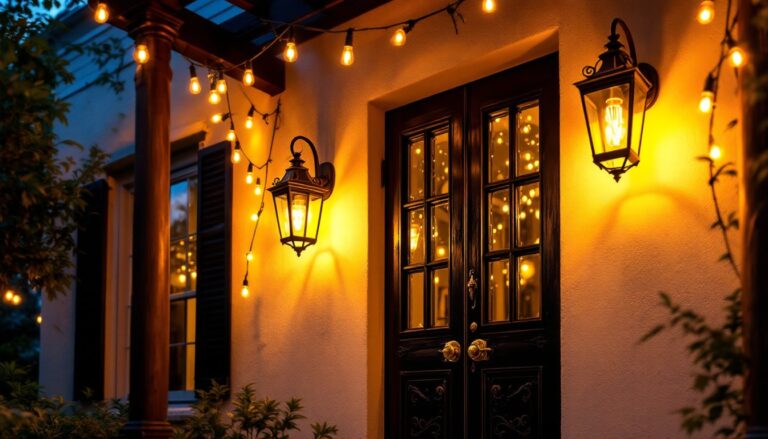
Outdoor lighting does three jobs: it makes your property safer, more functional, and more attractive. A well-lit entryway and walkway reduce trips and falls, critical for anyone, especially kids or older adults. Porch lights deter intruders and help you see who’s at the door. Beyond security, outdoor lighting extends your usable time outside. A lit patio means you can entertain into the evening: lights along garden beds add visual depth and interest year-round.
And here’s the honest part: if your backyard disappears into darkness once the sun sets, you’re essentially losing square footage of your home. Thoughtful outdoor lighting reclaims that space. Plus, when done right with energy-efficient fixtures, modern outdoor lighting runs surprisingly cheap to operate, far less than most homeowners expect.
Types of Outdoor Lighting Available at Lowe’s
Lowe’s stocks several categories of outdoor lighting, each suited to different needs and budgets.
Solar-Powered Lighting Options
Solar lights require zero wiring and no electrical knowledge. They charge during the day and glow at night, stick them in the ground or mount them on a fence and you’re done. Lowe’s carries solar path lights, spotlights, and accent fixtures starting around $10–$30 each. The trade-off: they’re less bright than hardwired fixtures, and their output depends on how sunny your location is. In cloudy regions or heavily shaded yards, they may not deliver the brightness you need.
Battery life varies by model and temperature. Many last 5–8 years before the rechargeable cell weakens. They work great for ambient lighting, marking pathways, or highlighting landscape features. Some homeowners use them as a stepping stone before investing in hardwired options. When choosing solar fixtures, look for models with at least 50–100 lumens for path lighting and 200+ lumens if you need functional area light. Reviews on best solar garden lights often highlight durability and real-world brightness as key factors.
LED and Energy-Efficient Fixtures
Hardwired LED fixtures are the workhorse of modern outdoor lighting. They’re bright, efficient, and last decades. Lowe’s offers recessed ceiling lights for covered patios, wall sconces for entryways, spotlights for landscaping, and overhead fixtures for decks. Prices range from $30 to $200+ depending on size and features. LED bulbs draw 75–80% less power than old incandescent outdoor bulbs, so your electric bill barely moves even if lights stay on for hours.
These fixtures require a weathertight junction box, proper wiring (typically 12 or 14 AWG), and a switch or timer. If your home doesn’t already have outdoor circuits available, you’ll either tap into an existing one (check load capacity) or run new wire from the breaker panel. That’s where most DIYers hit a wall. Running new electrical circuits outside falls under building codes in most jurisdictions: you may need a permit and inspection. If you’re adding lights to an existing patio or deck circuit and the load allows, it’s often a straightforward swap. If you’re starting fresh, hire a licensed electrician. It’s not worth the liability or a surprise fire risk.
How to Choose the Right Outdoor Lighting for Your Needs
Start by asking yourself what you’re lighting and why. Are you lighting a dark walkway? Securing the front of your house? Creating mood on a patio? Each need calls for different fixtures.
Brightness and beam angle matter more than most DIYers realize. A spotlight might output 500 lumens but focus it in a tight 20-degree beam, great for highlighting a tree, useless for general patio light. A flood light spreads 500 lumens across a 120-degree angle, making it better for open areas. Path lights don’t need blinding brightness: 50–100 lumens per fixture is plenty. Security lights for the back of your house might need 1,000+ lumens. Read the product label: it will list lumens and beam angle.
Color temperature affects mood. 2700K (warm white) feels cozy and residential, perfect for patios and entryways. 4000K (neutral white) is versatile and readable. 5000K (cool white or daylight) is brightest and best for security or task areas. Lowe’s clearly labels this: don’t guess.
Fixture material must survive your climate. For coastal areas, look for marine-grade brass or stainless steel. Aluminum works almost anywhere but can corrode if not powder-coated. Plastic fixtures are budget-friendly but fade over time in strong UV. Consider mounting height, visibility from the street, and whether HOA rules apply. Interior designers and DIY enthusiasts often explore outdoor living concepts to understand how lighting integrates into the bigger landscape design.
Installation Tips for DIY Outdoor Lighting Projects
Before you touch a tool, understand what you’re allowed to do. Adding solar lights or battery-powered fixtures requires no permit. Installing hardwired lights tied to a new circuit often does. Call your local building department and ask. A $50 permit and quick inspection beats a failed insurance claim.
For solar and battery lights:
- Choose a location with at least 4–6 hours of direct sun (more is better).
- Clear away plant growth that might block the solar cell.
- Follow the manufacturer’s instructions for charge time before first use.
- Push stakes firmly into soil or use the included hardware to mount wall-mounted versions.
- Turn on the on/off switch once positioned.
For hardwired fixtures, the prep work makes or breaks the job:
- Kill the power at the breaker before touching anything. Use a non-contact voltage tester to confirm the power is actually off.
- Plan your route. Decide where wire will run, above the soffit, through conduit, or in-wall if doing new construction. Outdoor wire must be rated UV-resistant and moisture-rated (typically UF-B cable).
- Use weathertight boxes and gaskets. A standard interior junction box is not acceptable outside. Buy weatherproof outlet boxes and fixture boxes rated for your climate zone.
- Fasten wire securely every 12 inches. Sagging or loose wire invites damage and is a code violation.
- Bury underground wire properly. Direct burial cable goes at least 12 inches deep in most zones (check local code). Shallow burial is a tripping hazard and invites shovel damage. Mark it with caution tape.
- Install a proper outdoor-rated switch or timer. A garage-mounted switch works, but a weatherproof switch mounted near the fixture is far more convenient. Some homeowners tie outdoor lights to motion sensors or dusk-to-dawn timers: Lowe’s sells both.
PPE and safety: Wear work gloves and eye protection when running cable through tight spaces. If drilling through siding or fascia, use a drill with a stop collar so you don’t punch through to the interior. If you’re working at height on a ladder, use a three-point contact (two hands, one foot, or vice versa) and have a spotter if possible.
Common mistakes to avoid: Not acclimating fixtures to outdoor temperatures before wiring them (condensation risk). Overloading a single circuit, check your fixture’s wattage and your breaker’s capacity. Forgetting to caulk around exterior wire entry points: water will find any gap. Placing lights where you’ll trip over wires or hit them with the mower.
If your project involves running a new dedicated circuit from the breaker panel, a GFCI-protected outlet, or tying into your home’s main electrical system, hire a licensed electrician. The difference between a $100 DIY install and a $400 professional install is trivial compared to the cost of fire or electrocution. Also explore security lighting options to ensure your outdoor lighting contributes to both aesthetics and safety, many homeowners overlook the dual purpose that well-designed outdoor fixtures can serve.
Conclusion
Outdoor lighting from Lowe’s gives you the tools to brighten your yard affordably and safely. Solar lights work best for accent and path lighting with minimal fuss. Hardwired LED fixtures deliver real brightness and long-term savings but require honest assessment of whether a permit and professional help are needed. Choose fixtures based on actual brightness needs and climate durability, not just aesthetics. And never skip the prep work, good outdoor lighting starts underground with quality conduit and weatherproof boxes, not with fancy bulbs. Your backyard is too good to leave dark after sunset.