Table of Contents
ToggleLos Angeles homeowners have a unique advantage: year-round mild weather that makes outdoor spaces livable from spring through winter. Yet without proper landscape lighting, that beautiful patio or manicured garden disappears after sunset. Landscape lighting in Los Angeles does more than illuminate pathways and patios, it extends your usable outdoor space, boosts curb appeal, and adds a layer of security to your property. Whether you’re looking to create an ambient backyard retreat or highlight architectural features, smart outdoor lighting transforms how you experience your home after dark.
Key Takeaways
- Landscape lighting in Los Angeles extends outdoor living space after sunset, enhances curb appeal, and improves home security by eliminating dark entry points and creating inviting evening atmospheres.
- Low-voltage LED systems are energy-efficient, costing only $2–$3 per month to operate 8 hours nightly, while solar lights offer a budget-friendly 0V alternative ideal for full-sun pathway edging.
- Pathway lights spaced 4–6 feet apart combined with strategic accent lighting (uplighting, spotlighting, and wall sconces) create layered ambiance without overlighting—key to professional-looking landscape lighting.
- DIY installation of low-voltage landscape lighting is achievable over a weekend, but always verify local permit requirements and use GFCI-protected outlets to avoid insurance and resale complications.
- Choose warm LED tones (2700K–3000K) for inviting evening atmospheres, and plan accent light placement by observing natural sight lines from your patio or street to maximize visual impact.
Why Landscape Lighting Matters In Los Angeles Homes
In Southern California’s temperate climate, outdoor entertaining often extends well into the evening. Without landscape lighting, you’re missing out on functionality and curb appeal. A well-designed lighting scheme does three critical things: it extends usable outdoor living space, highlights landscaping and architectural details, and improves security by eliminating dark corners and entry points.
Beyond aesthetics, landscape lighting adds measurable home value. Potential buyers perceive well-lit properties as better maintained and more desirable. Strategically placed lights also deter unwanted activity, motion-activated fixtures near entry points and walkways eliminate hiding spots that burglars exploit.
LA’s year-round sunshine is an asset, but it also means you’re managing shadows differently than cooler climates. Summer heat can stress plants during peak sun hours, making evening outdoor gatherings and sunset lighting more important for homeowner comfort. The dry climate is equally important: most landscape lighting systems require minimal maintenance, and corrosion is less of an issue than in coastal or humid regions, though salt air near the coast demands corrosion-resistant fixtures.
Types Of Landscape Lighting For Los Angeles Properties
Landscape lighting comes in several functional categories, each serving a different purpose in your yard design. Understanding each type helps you plan a lighting scheme that balances aesthetics, safety, and energy efficiency.
Uplighting directs light upward, highlighting trees, architectural features, or water features by creating dramatic shadows and depth. It’s ideal for accentuating specimen trees or the texture of stone walls. Downlighting mimics natural moonlight, casting soft shadows from trees or overhead structures onto seating areas below. This creates an inviting ambiance without harsh glare.
Path and step lights are practical safety fixtures that guide movement along walkways, driveways, and deck steps. They’re typically low-voltage and low-cost, making them a DIY-friendly starting point. Spotlights are narrow-beam fixtures that focus light on specific features, a water feature, sculpture, or landscape focal point. They’re more intense than ambient lights and work best as accent elements rather than primary illumination.
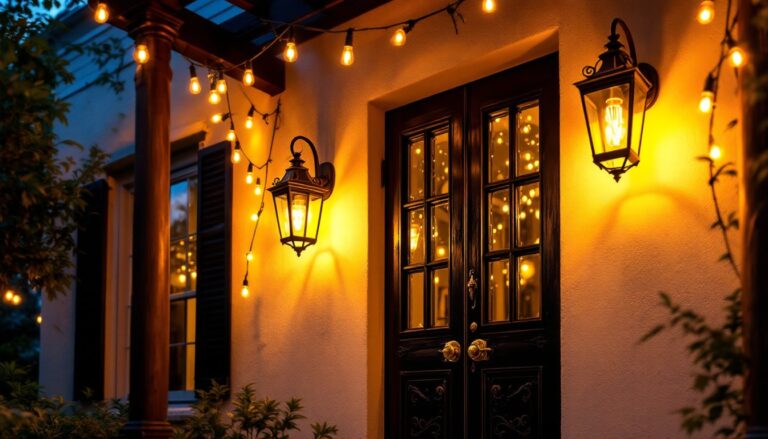
Wall-mounted sconces provide ambient light on patios, decks, and entryways while adding architectural interest. They’re available in countless styles and finishes to match your home’s aesthetic.
Pathway And Accent Lighting Options
Pathway lights are the workhorse of residential landscape lighting. They’re typically 6–12 inches tall with either in-ground spike mounts or deck-surface mounts. Low-voltage versions (12V) are safest for DIY installation because they run on a simple transformer rather than line voltage. LEDs have become standard, they’re durable, efficient, and cast light in warm (2700K–3000K) or cool (4000K–5000K) tones. For LA homes, warm tones create a more inviting evening atmosphere and pair well with Mediterranean, transitional, or modern landscapes.
Accent lighting, uplighting trees, spotlighting architectural details, or highlighting hardscape textures, adds dimension to your property at night. A single uplight aimed at a specimen tree creates a focal point: three or four spaced around a patio create layered ambiance. The key is restraint: overlighting looks cheap and washes out the landscape.
When planning accent placement, stand in your yard after dark and imagine sight lines from your patio or street. Where do your eyes naturally go? Those are the spots to light. Avoid aiming lights directly at windows or neighboring properties, glare is a safety hazard and a neighborly no-no.
Solar And Energy-Efficient Solutions
Solar landscape lights have improved dramatically in recent years and are now a viable option for homeowners seeking low-cost, maintenance-free illumination. Modern solar pathway lights with LED bulbs store energy during the day and illuminate at dusk automatically. The downside: they’re less bright than low-voltage LED fixtures and don’t perform well in shaded areas. They’re ideal for edging pathways in full-sun locations or creating subtle, ambient lighting.
Solar lights are 0V (no wiring required) and cost $10–$30 per fixture, compared to $20–$60 per light for low-voltage hardwired systems. Over 5–10 years, solar wins on installation labor, but low-voltage systems offer superior brightness and control if you plan to invest in a timer or smart home integration. Recent smart home technology guides from Digital Trends break down automation options that let you schedule landscape lighting through a smartphone app or voice assistant.
Low-voltage LED systems are energy champions: a 12V transformer powering ten 5W LED lights draws only 50 watts, less than a standard incandescent bulb. Most systems run on 120V household current through a 600–1500 watt transformer, which steps voltage down to 12V for safe outdoor use. Running costs are negligible: 8 hours of nightly operation at 50W costs roughly $2–$3 per month in electricity.
For homeowners in areas with direct sunlight and minimal shade, solar is a smart budget starter. For accent lighting, pathway lighting around water features, or properties shaded by trees, low-voltage hardwired systems deliver better results and justify the installation investment.
DIY Landscape Lighting Installation Guide For Homeowners
Installing low-voltage landscape lighting is a weekend project for most homeowners. Unlike electrical work that requires a permit, low-voltage systems run at 12V and don’t need licensed electrician approval in most LA jurisdictions (always check local codes first, some municipalities require permits for any outdoor wiring). But, you’ll need to run wiring from an outdoor outlet or GFCI-protected outlet near your panel, and that section may need a permit.
Materials You’ll Need:
- Low-voltage transformer (600–1500W, depending on total fixture wattage)
- 12-gauge or 14-gauge low-voltage wire (outdoor-rated, typically black)
- LED pathway and accent lights (5W to 10W per fixture)
- Wire connectors rated for outdoor use (non-corrosive)
- Outdoor-rated wire nuts or crimp connectors
- Stakes or mounts for lights
Tools:
- Shovel or spade (for burying wire)
- Wire stripper
- Flathead screwdriver
- Voltage tester (to verify safe conditions)
- Tape measure
Installation Steps:
-
Map your layout. Walk your yard at dusk with a flashlight, noting where shadows fall and where you want illumination. Mark light positions with spray paint or stakes. Pathway lights typically space 4–6 feet apart: accent lights depend on the feature size and desired intensity.
-
Install the transformer. Mount it on an exterior wall or inside a weatherproof box, positioned within 50 feet of your lights (voltage drop increases beyond this distance). Plug it into a GFCI-protected outdoor outlet. If no GFCI outlet exists near your installation site, hire an electrician to install one, this is not a DIY shortcut.
-
Run the wire. Low-voltage wire can run along the ground surface (held with landscape staples), but burying it prevents tripping hazards and protects from weather. Dig a shallow trench 3–4 inches deep along your pathway or garden bed. Lay the wire and cover it with mulch or soil. Avoid sharp rocks that can puncture insulation. If you’ll be digging later (planting shrubs, adding irrigation), mark the wire location with paint or caution flags.
-
Connect fixtures. Most low-voltage lights use simple push-connectors or twist-on terminals, no stripping or crimping required. Follow the light’s instructions exactly. If using wire nuts, wrap the connection with weatherproof tape to prevent corrosion.
-
Test the system. Turn on the transformer and verify all lights illuminate. If a light doesn’t work, check the connection and ensure the wire is fully inserted. A voltage tester ($10–$15) confirms power is reaching each fixture.
-
Adjust angles and intensity. Most pathway lights allow directional adjustment. Aim accent lights at features: make sure pathway lights don’t create glare or blind you when walking. Some transformers have built-in timers or dusk-to-dawn sensors, set these after testing.
Safety & Permits:
Check with your city or county building department before running wires. While 12V systems are low-risk, the connection point to household power may require a permit. Running high-voltage wire underground definitely requires one. In LA, unpermitted electrical work can affect homeowner’s insurance claims and property sales.
Common Mistakes:
- Undersizing the transformer. If you add more lights later and exceed the transformer’s wattage, lights will dim. Choose a transformer rated 20–30% above your current load to accommodate future expansion.
- Burying wire without protection. Use conduit if you anticipate digging, gardening, or construction in that area.
- Poor drainage around transformer. Transformers don’t like standing water. Mount them on a slight slope or in a weatherproof box with drainage.
- Ignoring the GFCI outlet requirement. A standard outlet won’t protect you if you nick the low-voltage wire during digging. GFCI is non-negotiable.
For design inspiration and hardscape planning, Gardenista’s landscape guides offer styling ideas for outdoor spaces that pair beautifully with thoughtful lighting. Product reviews and smart home device comparisons on CNET can help you evaluate smart controllers and app-based scheduling options if you want to upgrade later.
Conclusion
Landscape lighting transforms your Los Angeles yard into a functional, beautiful space after sunset. Start with pathway lights for safety and ambiance, then layer in accent fixtures to highlight your home’s best features. Whether you choose solar for simplicity or low-voltage LED for superior control and brightness, the investment pays dividends in curb appeal, security, and outdoor enjoyment. Plan your layout carefully, respect permits and GFCI requirements, and don’t hesitate to hire an electrician for the high-voltage connection. Your evening landscape will thank you.