Table of Contents
ToggleLandscape lighting isn’t just about visibility, it’s about creating an outdoor living space that works 24/7. In Naples, Florida, where the climate stays warm year-round and outdoor entertaining happens most nights, strategic lighting transforms a dark yard into a functional, beautiful extension of your home. Whether you’re lighting a pathway for safety, accenting architectural features, or creating ambient mood for entertaining, landscape lighting layers security, aesthetics, and usability into one system. This guide walks you through the planning, installation, and maintenance of landscape lighting specifically designed for Naples’ subtropical conditions.
Key Takeaways
- Landscape lighting in Naples, Florida enables year-round outdoor living by extending usable yard time past sunset while enhancing safety, security, and property value.
- A well-designed landscape lighting system in Naples uses layered approaches: functional lighting for paths and entries, accent lighting for architectural features, and ambient lighting for gathering spaces.
- Marine-grade, corrosion-resistant fixtures with IP65/IP67 ratings and direct-burial wiring are essential for withstanding Naples’ salt air, intense UV, and frequent heavy rain.
- DIY installation works for low-voltage path light kits ($100–$400), but integrated systems and any line-voltage fixtures require a licensed electrician and Collier County permits.
- Regular seasonal maintenance—cleaning fixtures twice yearly, trimming vegetation, checking connections after heavy rain—keeps landscape lighting safe and functional year-round in Florida’s subtropical climate.
Why Landscape Lighting Matters in Naples
Naples’ extended twilight season and year-round entertaining culture make landscape lighting nearly essential, not optional. Unlike northern climates where outdoor living shrinks in winter, Naples homeowners use their yards 365 days a year. Proper lighting extends that usable time past sunset, and it does more than make things visible.
First, there’s the safety angle. A lit pathway or driveway prevents trips and falls, a real concern on uneven terrain or around pools. Dark corners and entryways become security liabilities: outdoor lighting deters trespassers and lets you see who’s approaching the house. Insurance companies recognize this, and some policies offer discounts for properties with adequate outdoor lighting.
Second, landscape lighting enhances property value and curb appeal. Well-lit landscaping, architecture, and entry features photograph dramatically at night and register in potential buyers’ minds as a premium property. Architectural accent lighting on stone columns, uplighting on mature trees, or subtle pathway markers create visual interest and perceived value.
Third, the subtropical setting itself demands thought. Salt air, high humidity, intense sun, and afternoon thunderstorms stress outdoor fixtures and wiring. Choosing lighting built for Florida’s climate, UV-resistant materials, corrosion-resistant finishes, and proper drainage, saves replacement costs and keeps the system safe.
Essential Landscape Lighting Types for Your Yard
Landscape lighting breaks down into a few functional categories. Understanding each helps you build a balanced system.
Path and Accent Lighting Options
Path lights are low-voltage fixtures (typically 12V) mounted on short stakes, placing light 12–18 inches above ground. They mark walkways, driveways, and pool edges. They’re inexpensive, easy to install with no trenching needed, and non-threatening to look at during the day. Expect 2–5 watts per fixture and coverage of about 4–6 feet of pathway per light.
Accent lighting, also called uplighting or downlighting, aims light at trees, shrubs, walls, or architectural details. A 15–20 watt uplighter buried in mulch at the base of a tree throws light upward, creating drama and depth. Downlighting mounted in an eave or soffit casts light down onto a porch or planting bed. These fixtures are more visible during the day, so placement and fixture finish matter.
Spotlights cast narrow beams, ideal for highlighting a focal point like a water feature or stone statue. Floodlights spread a wider beam, useful for general area illumination like a patio or deck. Both come in 20–50 watt ranges for low-voltage systems. For larger properties or security needs, you might consider 120V line-voltage floodlights (150–500 watts), but these require a licensed electrician and a permit.
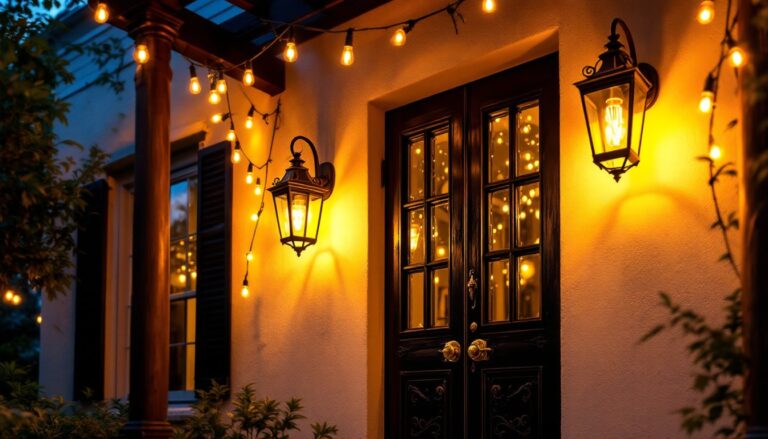
Ambient or area lighting sets the overall mood. String lights, lanterns, or recessed deck lights create gathering spaces. In Naples, overhead string lights or ceiling-mounted fixtures on a pergola let you enjoy the outdoors comfortably after dark without harsh shadows.
Designing a Lighting Plan for Your Naples Property
Start with a sketch, literally a rough pencil drawing of your property, even if it’s not to scale. Mark the house, driveway, walkways, trees, plantings, pool (if you have one), and sitting areas. Now think about how you move through the space: the path from the driveway to the front door, the route around the house to the back patio, the edge of the pool, the seating area where you host friends.
Plan layers: First, functional/safety lighting (paths, entries, driveways). Second, accent lighting (trees, architectural features, water features). Third, ambient or mood lighting (gathering spots, patios). Don’t light everything equally: create contrast by leaving some areas darker and others brighter. This guides the eye and feels sophisticated.
Consider your home’s architecture and color palette. A Mediterranean-style home with stucco and tile might shine with warm-toned uplighting: a modern home with clean lines might favor cooler tones or directional downlighting. The outdoor lighting professionals in Naples offer portfolios showing regional styles.
Could you install this yourself? Low-voltage path lighting and small uplighters, yes, they’re essentially plug-and-play kits available at big-box retailers. For larger, integrated systems with multiple zones, buried wiring, or line-voltage fixtures, hire a licensed electrician. Florida electrical codes (based on the NEC, National Electrical Code) require permits for any hard-wired outdoor lighting, and Miami-Dade County and Collier County (which includes Naples) have specific wind-load and installation requirements. Cutting corners here risks shock, fire, or failed inspection.
Weatherproofing and Maintenance for Florida Climate
Naples’ salt air, intense UV, and frequent heavy rain are tough on outdoor fixtures. Cheap plastic fixtures fail in 1–2 seasons: quality matters.
Look for marine-grade aluminum, stainless steel, or powder-coated metal rather than bare iron or cheap plastic. Fixtures should carry an IP65 or IP67 rating (ingress protection), meaning they’re sealed against dust and water spray. LED bulbs are standard now, they’re more UV-stable than halogen or incandescent and run cooler, reducing heat stress on seals.
Wiring should be direct-burial rated (labeled for in-ground use). Standard household wire will corrode underground: direct-burial cable has extra shielding. For low-voltage systems, a GFCI (ground-fault circuit interrupter) outlet at the transformer is essential for safety in wet climates.
Maintenance is light but regular. Trim back vegetation that blocks light or traps moisture around fixtures, wet mulch against a light can rot seals. Clean fixtures 1–2 times yearly with fresh water and a soft cloth: salt buildup dulls lenses and reduces output. Check electrical connections and the transformer after heavy rain. Inspect for corrosion on metal hardware and replace caulk around any mounting points every few years.
Schedule seasonal checks: before summer (before heavy rain), after summer (salt spray cleanup), and before December entertaining season. Resources like Southern Living’s outdoor planning guides often include seasonal maintenance reminders for Florida homeowners.
Getting Your Landscape Lighting Installed
If you’re installing path lights yourself: Buy a low-voltage 12V LED path light kit with a transformer, pre-assembled fixtures, and cable. Kits run $100–$400 depending on the number of lights. Plug the transformer into a GFCI-protected outdoor outlet. Lay the cable along the ground or bury it 6–12 inches in mulch (no trenching required). Stake the fixtures every 4–6 feet. Test before adding soil. Done in an afternoon, and you can adjust placement anytime.
For a full integrated system: Call a licensed landscape lighting contractor or electrician. They’ll design a layout, run professional-grade (often 15–20 gauge) direct-burial cable in shallow trenches, install a properly graded transformer, and wire everything to code. This costs $2,000–$8,000+ depending on property size and complexity, but it’s reliable, warrantied, and passes inspection. In Naples, the Collier County Building Permit office requires permits for any electrical work: your contractor should handle this.
During installation, mark the cable route with flags or spray paint so future digging (landscaping, irrigation, repairs) doesn’t hit it. If the contractor runs wire under the driveway or deck, it should use conduit for protection.
Safety reminder: If you feel any shock, see water pooling near fixtures, or smell burning plastic, turn off the system and call an electrician. Don’t assume it’s safe because you’re using low-voltage: poor wiring or water damage in a transformer can still cause problems.
Resources like Better Homes & Gardens’ home improvement section include DIY lighting ideas, but for anything permanent or high-voltage, respect your limits and hire licensed professionals.
Conclusion
Landscape lighting in Naples is a smart investment that extends your outdoor living season, boosts curb appeal, and improves security. Start with a clear plan, prioritize durability over bargain fixtures, and respect local electrical codes. Whether you tackle path lighting yourself or hire a professional for a full system, the key is matching fixtures and wiring to Florida’s harsh climate. Regular maintenance, cleaning, trimming vegetation, checking connections, keeps your system bright and safe year-round.