Table of Contents
ToggleAdding lighting to your yard doesn’t have to mean running electrical wire, hiring an electrician, or watching your electricity bill climb. LED solar outdoor lighting has matured into a practical, affordable solution that handles itself without panels, trenching, or permits. Whether you’re lighting a pathway, defining a patio, or adding security around the perimeter, solar-powered LED lights deliver real brightness and reliability. This guide walks you through choosing the right fixtures, laying them out effectively, and getting them installed so they actually work as advertised.
Key Takeaways
- LED solar outdoor lighting eliminates the need for electrical wiring, permits, and installation labor—saving thousands in upfront costs and allowing you to set up fixtures yourself in an afternoon.
- Modern solar lights with lithium-ion batteries and efficient LEDs provide reliable illumination for 5+ years, delivering 10–300 lumens depending on fixture type—far surpassing the dim performance of older solar models.
- Proper placement requires 6–8 hours of direct daily sunlight and strategic spacing: pathway lights 4–6 feet apart, spotlights 8–12 feet apart, based on brightness needs and yard layout.
- Simple maintenance—cleaning solar panels annually with a soft cloth and checking battery charge before installation—ensures consistent performance and extends fixture lifespan significantly.
- Mid-range solar LED fixtures ($25–50 per unit) offer the best value for homeowners; pathway lights start at $15–40, while spotlights and wall-mount options range from $30–120, eliminating recurring electrical costs.
Why LED Solar Outdoor Lighting Is a Game-Changer for Your Home
Key Benefits of Solar-Powered Solutions
Solar LED lights solve several problems at once. No wiring means no electrical work, no permits, and no safety inspections, you can install them yourself in an afternoon. They cost almost nothing to run after the upfront purchase because they draw energy from the sun during the day and automatically light up at dusk. The LED component matters just as much: LEDs are efficient, durable, and produce white or warm light in a variety of color temperatures (measured in Kelvin, typically 2700K–5000K for outdoor use).
Reliability has improved dramatically. Early solar lights from a decade ago were dim and had short battery lifespans. Today’s units use lithium-ion or NiMH batteries rated for thousands of charge cycles, and LED output is genuinely usable for pathway lighting, accentuating landscaping, or general illumination. Many security lighting for home applications also integrate solar LED fixtures into their layouts because the setup is flexible and low-risk.
Budget-wise, a modest solar pathway light runs $15–40, while larger solar spotlights or wall-mount fixtures range from $30–120. Compare that to trenching for a 12/2 outdoor-rated circuit (typically $1,000–3,000 in labor alone) and you’ll see why solar is attractive. Zero recurring electrical costs, zero maintenance contracts, just buy them, place them, and they work.
Types of LED Solar Outdoor Lights and Where to Use Them
Popular Styles for Homeowners and DIY Projects
Pathway lights are the entry point for most DIYers. These short stakes, typically 12–18 inches tall, sit flush in garden beds, along driveways, or beside steps. They’re subtle, rarely intrusive, and perfect for marking where people walk at night. Output ranges from 10–50 lumens, which is enough to see where you’re going without blinding you.
Solar spotlights mount on walls, fences, or stake into the ground and point upward or across landscaping features. These typically deliver 100–300 lumens and often include a motion sensor, making them popular for security and accentuating trees or shrubs. A motion sensor cuts battery drain because the light only runs when triggered.
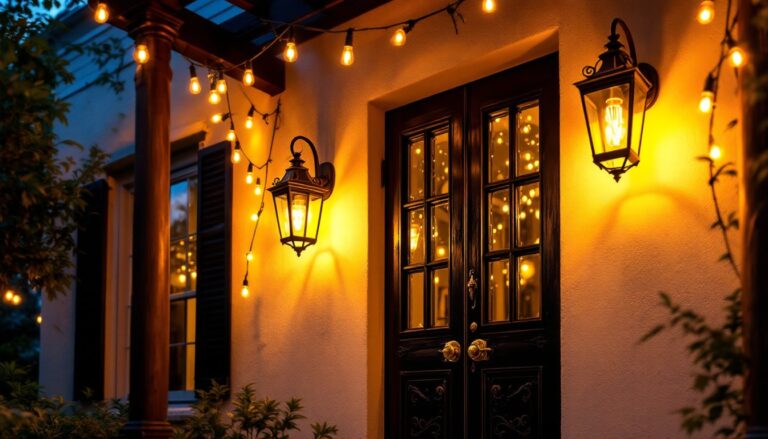
Wall-mount or post-cap fixtures sit on top of fence posts, mailbox posts, or attached to house siding. These are styled to match traditional outdoor fixtures, think lanterns or sconces, and blend into your home’s aesthetic while providing ambient light for patios and entry points.
String lights and solar rope lights drape across patios and pergolas for ambient, decorative effect. Output is lower per bulb, but quantity makes them effective. They’re best for setting mood rather than functional pathway lighting.
Independent testing from Digital Trends’ solar light review and CNET’s roundup breaks down performance differences between budget, mid-range, and premium models. Most homeowners get solid results in the $25–50-per-fixture range, with premium brands offering 5+ years of reliable service versus 2–3 years from budget lines.
Planning Your Solar Outdoor Lighting Layout
Before you buy anything, walk your yard at dusk with a flashlight. Note where you naturally want light: around the deck or patio, along the main path from the street, near entry doors, and along garden beds if you want to accent plantings. Weak spots, like dark corners or the space between your driveway and garage, are where security lights matter.
Sun exposure is critical. Solar lights need 6–8 hours of direct sunlight daily to charge fully. If your yard is heavily shaded by trees or a neighbor’s house, north-facing walls, or covered by a patio roof, those lights won’t perform. Test the sun pattern across your yard for a couple of days. Morning sun and afternoon sun aren’t equal: afternoon western sun is usually more intense. Place pathway lights where they’ll get consistent exposure.
Spacing depends on the light’s brightness and your goal. Pathway lights should be 4–6 feet apart for safe navigation: wider spacing (8+ feet) works if you’re just marking a route rather than illuminating it. Spotlights for accent lighting have a wider throw, so 8–12 feet apart is typical. Patio lights should aim for ambient brightness, usually achieved with 3–5 fixtures depending on patio size.
Measure distances and sketch a simple plan. Include distances from structures and existing electrical outlets (even though you don’t need them, you’ll want to know where they are for reference). This prevents buying too many or too few lights and saves trips back to the store. Sunset’s landscape lighting guide provides layout ideas for different yard styles and shapes.
Installation Tips for Maximum Performance and Aesthetics
Installation is simple, but a few habits separate a professional-looking setup from a sloppy one.
Surface prep is half the work. Clear soil, leaves, or mulch away from where you’ll stake the light. If the ground is hard-packed clay or compacted, use a flat-head screwdriver to loosen a pilot hole: trying to force a stake into hard ground bends it or strips the joint at the base. For wall-mount fixtures, clean the surface with a cloth, and if the mounting surface is rough, a light sanding helps the adhesive or screws grip better.
Charge before placing. Most solar lights ship with the battery disconnected or a plastic tab inserted under the solar panel to prevent self-discharge during shipping. Remove that tab and let the light sit in direct sun for a full charge (24 hours is ideal) before expecting it to light up. Partial charges lead to weak performance and customer confusion.
Angle matters. Pathway lights should point mostly downward, not directly at eye level, which creates glare. Spotlights should target the feature you want to highlight: angle them at landscape plants, architectural details, or entry points, not into your neighbor’s bedroom window. Step back a few feet and look at the effect before finalizing placement.
Stake lights straight and snug. Lights that tilt or wobble after one season usually weren’t pushed deep enough into the soil. Drive stakes down until the fixture sits firmly: loose installations work themselves deeper as ground shifts. For wall mounts, use corrosion-resistant hardware (stainless steel or exterior-grade fasteners) and avoid aluminum on brick, which can cause staining.
Check sight lines after dark. What looks fine in daylight might be shadowed at night, or the light might be too dim for its intended purpose. Do a walkthrough after the light has been on for 30 minutes to see how it actually performs. You can always relocate a stake or rotate a fixture.
Maintenance and Seasonal Care for Long-Lasting Results
Solar outdoor lights are low-maintenance, but seasonal attention keeps them performing. Once a year (spring is ideal), wipe the solar panel with a slightly damp cloth to remove dirt, pollen, and bird droppings that block sunlight. Don’t use abrasive cleaners, a soft cloth and mild soap work fine. If the panel is cloudy or yellowed from UV exposure, that’s normal aging: it doesn’t usually impact performance noticeably until after 3–5 years.
Battery longevity depends on charge cycles and storage temperature. Modern lithium-ion batteries handle cold winters well, but extreme heat (consistently over 110°F) or deep freezes can reduce lifespan. In harsh climates, bringing portable fixtures inside during winter isn’t silly, it extends battery life and prevents damage from salt spray or heavy snow accumulation.
If a light stops working or dims noticeably, the battery is usually at fault. Replacement batteries for popular models cost $10–25 and take 5 minutes to swap: they’re more cost-effective than buying a new fixture. Some premium lights offer replaceable panels too, which makes repairs even cheaper. Budget models with glued-on panels aren’t repairable, just replace the whole unit.
Check for debris blocking the light or shading the solar panel after storms. Heavy snow, fallen branches, or accumulated leaves reduce charging. Clear the panel annually or as needed. Inspect stakes or wall mounts for corrosion or looseness: tighten hardware and replace any visibly corroded parts to prevent failure. With these small habits, a quality solar LED light lasts 5+ seasons without drama.